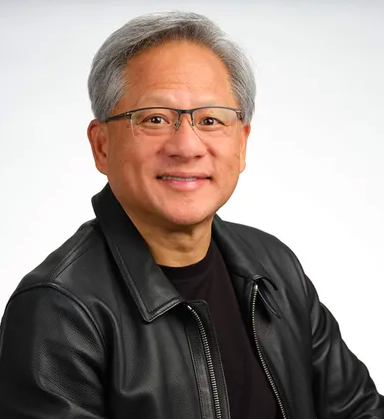
Jensen Huang, the co-founder and CEO of NVIDIA, is widely regarded as a transformative figure in the world of technology. Since establishing NVIDIA in 1993, Huang has guided the company from a graphics card startup to a global leader in artificial intelligence (AI), high-performance computing, and autonomous systems.
Born in Taiwan and raised in the United States, Huang developed an early fascination with engineering and technology. He earned his degree in electrical engineering from Oregon State University and a master’s degree from Stanford University. These formative experiences laid the groundwork for his deep understanding of computing and graphics—fields that would shape NVIDIA’s future.
Under Huang’s leadership, NVIDIA revolutionized gaming with the introduction of its GeForce graphics cards. Yet his vision extended far beyond gaming. Recognizing the untapped potential of GPUs for large-scale computing, he positioned NVIDIA as a key player in AI research and applications. Today, NVIDIA GPUs power breakthroughs in machine learning, autonomous vehicles, scientific simulations, and data analytics.
Huang is known for combining technical expertise with strategic insight. He spearheaded the development of CUDA, a platform that allows developers to harness GPU power for complex computational tasks, and has led NVIDIA into AI-driven solutions for industries ranging from healthcare to cloud computing. His approach emphasizes innovation, long-term thinking, and calculated risk-taking, which has kept NVIDIA ahead in an intensely competitive industry.
Beyond his technical contributions, Huang is recognized for his ability to inspire and lead teams. He has cultivated a company culture that encourages experimentation and creativity, enabling NVIDIA to remain at the forefront of technological advancement.
As AI, robotics, and high-performance computing continue to shape the future, Jensen Huang’s vision remains central to NVIDIA’s ongoing impact. His leadership has not only propelled the company to new heights but also influenced the broader trajectory of modern computing, redefining what is possible in technology today.



Leave a Reply